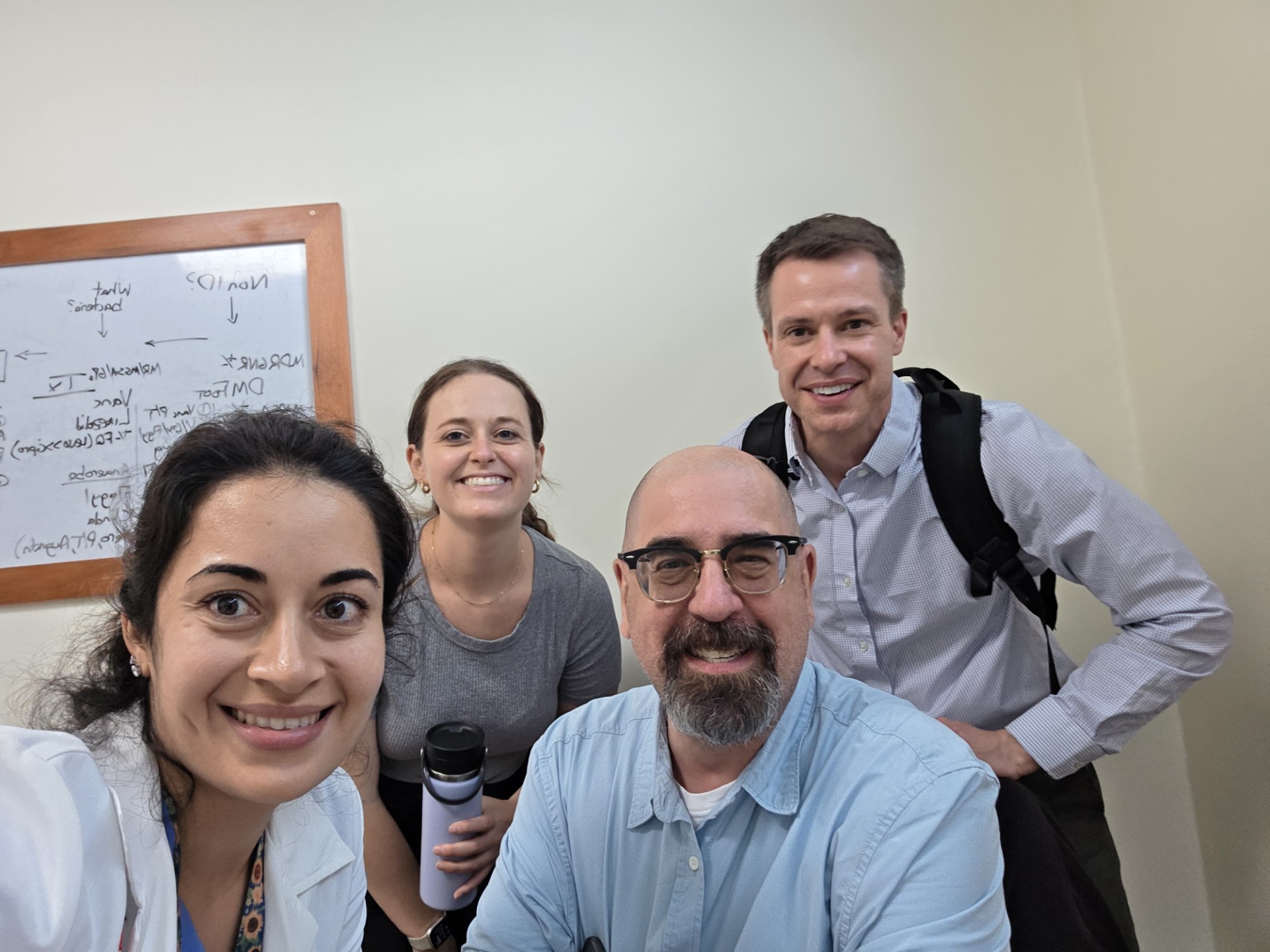


Aneesha Kamath, MD, combined med-peds infectious diseases fellow, joined the AMPATH Kenya partnership for six weeks to work with IU and Kenyan colleagues on infectious disease care and antimicrobial resistance (AMR) at Moi Teaching and Referral Hospital (MTRH).
“I rounded with the infectious disease (ID) consult service in adult and pediatric wards at MTRH,” Dr. Kamath said. “I also taught lectures to medical students and pediatric registrars.”
She emphasized the importance of AMPATH’s AMR effort, “Antimicrobial resistance affects patients and health care systems worldwide, but like many obstacles in healthcare systems, it seems that low- and middle-income countries are faced with a higher and more complex burden of AMR.”
Limited diagnostic testing, the hospital’s physical environment and decreased availability of pharmaceutical options are all challenges that doctors in Kenya face.
While in Eldoret, she collaborated with IU colleagues Drs. Steven Hatch and Jack Schneider; Kenyan partners Dr. Cyprian Hototo Ong’era and Celia Ngetich; Purdue Global Health PharmD Fellow Dr. Adriana Gardner; and other members of the AMPATH Consortium. Her work was sponsored by both the adult and pediatric ID divisions at IU School of Medicine and the Merck/O’Donnell funds.
According to Dr. Hatch, AMPATH associate site director for infectious diseases and associate professor of clinical medicine at IU School of Medicine, “The ID consult service performs three separate but interlocking functions at MTRH. First, we serve as a link between the ward clinicians and the microbiology lab by delivering preliminary results on specimens sent to the lab, and we help clinicians interpret those results to make antibiotic changes for their patients. Second, we promote antibiotic stewardship by reviewing cases and encouraging physicians to use antibiotics that are less likely to result in significant antibiotic resistance. Finally, we provide advice on diagnosing and managing highly complex infections.”
Dr. Ong’era, medical officer on the service, describes it as a “bridge between the microbiology laboratory and frontline clinical teams. Our main goal is to provide bedside consults for patients with complex infectious diseases, guide appropriate antimicrobial use, and promote diagnostic stewardship.” He facilitates daily “Handshake Rounds,” where the lab and clinical teams discuss cases together which has greatly improved communication and real-time decision-making.
“The ID service strengthens patient care by ensuring targeted and evidence-based antimicrobial therapy which has already led to significant reductions in unnecessary antibiotic use, faster clinical decision-making, and more collaboration between the laboratory and clinicians,” Dr. Ong’era continued.
“Because of her advanced level of training, Dr. Kamath was able to help me run the service and took responsibility for both the recommendations as well as teaching residents,” said Dr. Hatch. “I can’t emphasize enough how much I enjoyed working with her, and I hope that we will see her back in Kenya in the future!”
“Hosting visiting fellows like Dr. Kamath has been an incredible experience,” added Dr. Ong’era. “They bring a wealth of global expertise, fresh perspectives, and mentorship that help strengthen our clinical reasoning and stewardship practices. Their presence fosters mutual learning; combining international best practices with the realities of care in a resource-limited setting.”
Dr. Hatch added, “Establishing a robust ID program is critical at this point in MTRH’s history. We are literally everywhere in the hospital because infections happen everywhere. You have to learn how to see things not only from the point of view of internal medicine, but also how surgeons think about a case involving an infection, how intensivists think about infections, and so on. I think that multidisciplinary approach is a boon for trainees, whether from IU or from Kenya.”
“It was an incredible learning opportunity for me, and it shaped some of my ideas for future career aspirations,” Dr. Kamath said. “I am hopeful to go back and round again on the ID consult service if funding allows. I am so grateful that IU supported this experience for me and hope other fellows will seize the opportunity.”